
Spring Boot AOP: Part 2 - How AOP Actually Works Under the Hood?
The Magic
In Part 1, we saw how AOP can magically add logging, security, and other cross-cutting concerns to your methods without touching your business code. But how does Spring actually pull off this magic trick?
Let’s say you have this simple service:
@Service
public class PaymentService {

    public void processPayment(String userId, BigDecimal amount) {
        // Just business logic, nothing else
        debitAccount(userId, amount);
        sendConfirmation(userId);
    }
}
And you want to add logging to it using AOP:
@Aspect
@Component
public class LoggingAspect {

    @Before("execution(* com.app.service.*.*(..))")
    public void logBefore(JoinPoint joinPoint) {
        System.out.println("Method called: " + joinPoint.getSignature());
    }
}Question: How does Spring know to run logBefore() when you call processPayment()? You never explicitly called the logging method anywhere!
The answer: Proxies.
Understanding the Proxy Pattern
Spring AOP works by creating a proxy object that wraps around your actual bean. Think of a proxy as a middleman that intercepts calls to your methods.
The Real-World Analogy
Imagine you’re a celebrity (your business logic), and you hire an assistant (the proxy) to handle your calls.
When someone calls you:
- The call goes to your assistant first
- Your assistant checks if it’s important (applies advice)
- Your assistant forwards the call to you
- You do your work
- Your assistant might do something after you’re done (more advice)
That’s exactly how Spring AOP works!
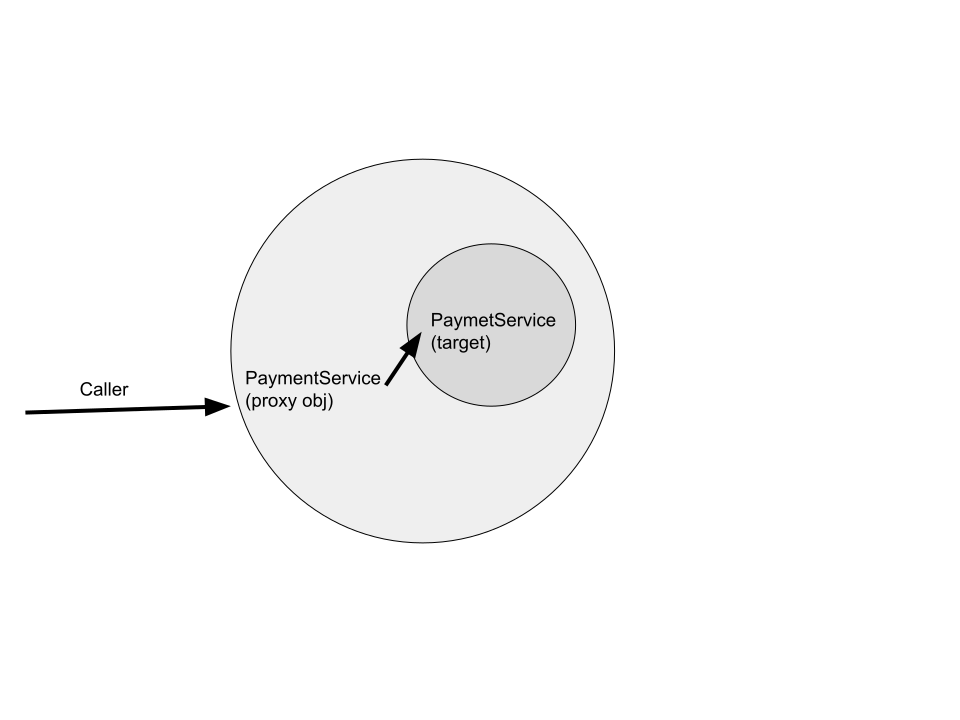
The Technical View
Client Code
    ↓
    calls method
    ↓
Proxy Object (created by Spring)
    ↓
    executes @Before advice
    ↓
Actual Bean (your service)
    ↓
    business logic runs
    ↓
Proxy Object
    ↓
    executes @After advice
    ↓
Client Code
    ↓
    gets result
How Spring Creates Proxies
When Spring Boot starts up and creates your beans, here’s what happens:
Step 1: Bean Creation
Spring scans your application and finds your PaymentService:
@Service
public class PaymentService {
    public void processPayment(String userId, BigDecimal amount) {
        // business logic
    }
}
Step 2: Aspect Detection
Spring also finds your LoggingAspect:
@Aspect
@Component
public class LoggingAspect {
    @Before("execution(* com.app.service.*.*(..))")
    public void logBefore(JoinPoint joinPoint) {
        // logging logic
    }
}
Step 3: Proxy Creation
Spring thinks: “Hmm, PaymentService matches the pointcut expression in LoggingAspect. I need to create a proxy!”
So instead of giving you the actual PaymentService bean, Spring creates a proxy that wraps it:
// What you think you're getting
PaymentService service = applicationContext.getBean(PaymentService.class);

// What you're actually getting
PaymentServiceProxy service = new PaymentServiceProxy(actualPaymentService);
Step 4: Method Interception
When you call a method:
paymentService.processPayment("user123", new BigDecimal("100.00"));The call goes through the proxy:
public class PaymentServiceProxy extends PaymentService {

    private PaymentService target; // the actual service
    private LoggingAspect loggingAspect;

    @Override
    public void processPayment(String userId, BigDecimal amount) {
        // 1. Execute @Before advice
        loggingAspect.logBefore(joinPoint);

        // 2. Call the actual method
        target.processPayment(userId, amount);

        // 3. Execute @After advice (if any)
        // ...
    }
}
Key Insight: You never directly interact with your actual bean. Spring always gives you the proxy, and the proxy handles all the AOP magic before forwarding calls to your real bean.
What’s Next?
In this part, we’ve uncovered the magic behind Spring AOP—proxies. You now understand:
- How Spring creates proxy objects that wrap your beans
- The flow of method calls through proxies
- Why your advice gets executed automatically
But we’ve only scratched the surface. There’s more to learn about proxy types, limitations, and practical implementation.
In Part 3 of this series, we’ll explore:
- CGLib vs JDK Proxies - Understanding the two proxy mechanisms
Key Takeaways
- Spring AOP uses proxies to intercept method calls
- The proxy wraps your bean and applies advice before/after method execution
- You never directly interact with your actual bean. Spring always gives you the proxy
- Understanding proxies is crucial for debugging AOP issues
See you in Part 3!
 Series: Spring Boot - Aspect Oriented Programming
Part 2 of 5
Comments
Join the discussion and share your thoughts